MIA WMS is the solution for companies with complex warehouse and logistics structures—scalable, customizable, and fully integrable.
The more complex the warehouse processes, the faster isolated, standalone solutions reach their limits. For companies that want to fully control their intralogistics, MIA WMS is the right solution. It is the warehouse management system designed for the comprehensive control of intralogistics processes in manual, partially automated, and fully automated warehouses, with flexible integration into a wide variety of ERP systems.
Our project-based services include a detailed process analysis—conducted on-site, among other locations—followed by the precise development and configuration of the warehouse management system, as well as customized support for ongoing operations, such as maintenance contracts, continuous remote monitoring of critical components, and telephone hotline support.
It combines monitoring, control, and operational execution into a seamless system. This creates a stable, natural flow from goods receipt to shipping.
Identifying, analyzing, and optimizing key logistics processes in collaboration with the customer, directly on-site at the company.

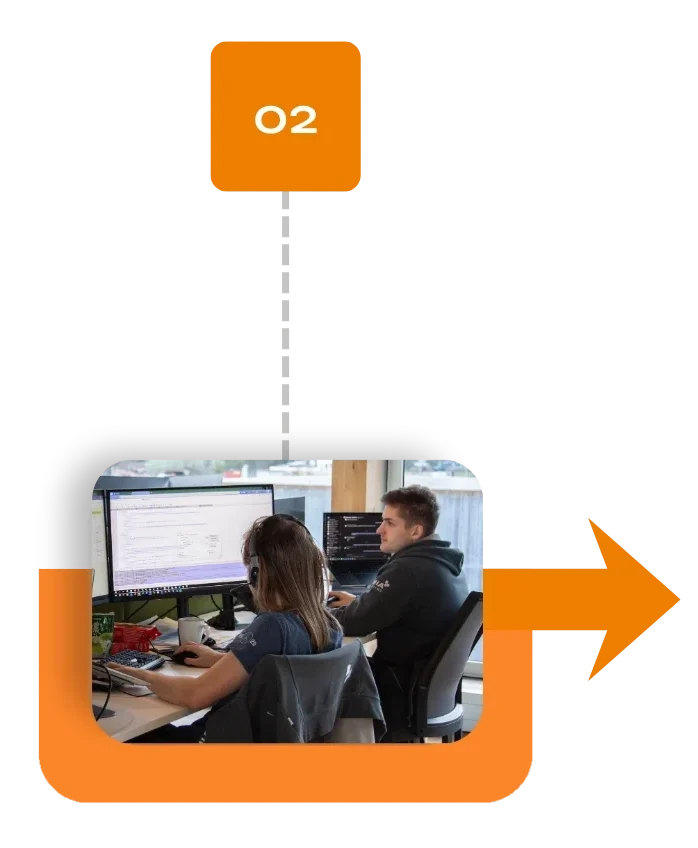
Development and configuration of the warehouse management system, with the customer involved in the relevant development phases according to a strict schedule to ensure that deadlines and the project budget are met.
Ongoing operations with customized maintenance contracts, continuous monitoring of critical components via remote maintenance, and telephone hotline support.
For manual, semi-automated, and fully automated warehouses
For complex, integrated warehouse processes
Scalable
Suitable for growing and complex structures
Stable even with high complexity and volume
MIA WMS helps you get the most out of your logistics operations:
What are the key success factors?
The MIA Warehouse Management System consists of four clearly defined components that together form a consistent, stable system. Each component fulfils its own role – from central control and operational execution to transparency and analysis. Together, they enable intralogistics processes to be not only mapped, but also managed in a targeted manner.
The Cockpit is the heart of our WMS. Stocks, master data, and transports can be viewed and managed directly, while interactive metrics help provide an informed assessment of the current situation.

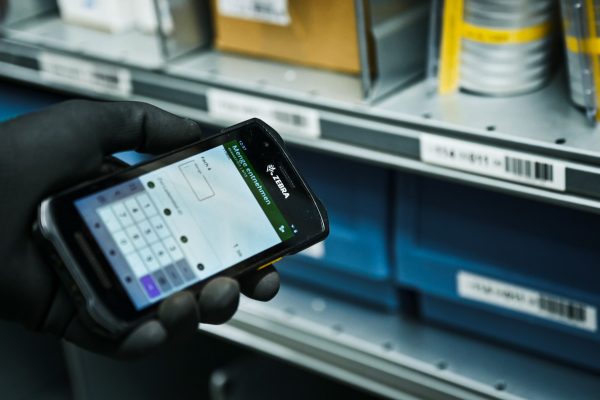
MIA Mobile is the solution for all logistics processes in manual warehouses. It consistently implements the principle of ‘goods to person’ and guides employees through clearly defined processes – intuitively, efficiently and with few errors.
Motion In Action means: standardised processes, optimised routing and transparent feedback ensure a stable flow even in dynamic, manual warehouse areas.
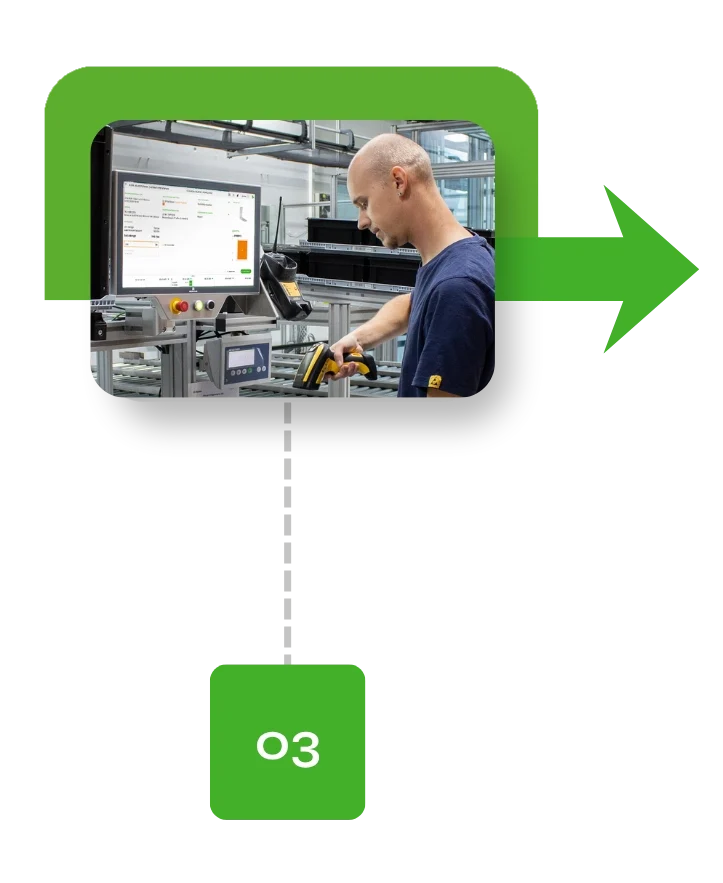
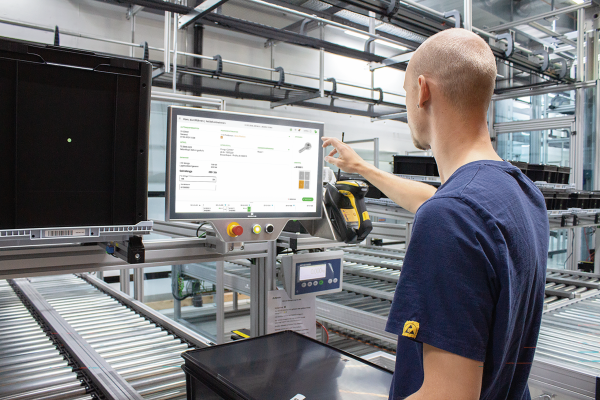
MIA Touch is the application for logistics processes at stationary workstations – for example, in small parts warehouses based on the ‘goods to person’ principle.
Clear process information, high performance and intuitive operation enable quick start-up and reliable processing – even at high throughput rates.
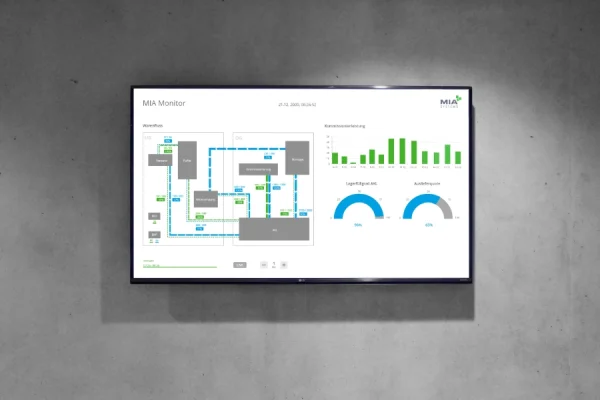
The MIA Monitor makes the natural flow of logistics visible. It visualises material flows, key figures and system statuses in real time and in a historical context – clearly, comprehensibly and interactively.
In an increasingly complex logistics world, the MIA Monitor creates transparency and orientation. Relevant data from ongoing operations is clearly presented so that deviations, bottlenecks and potential can be identified at an early stage. The monitor thus supports not only analysis but also active management of logistics processes.
The MIA Monitor is available in four specialized versions.
The MIA Monitor Standard provides a centralized overview of the entire logistics system. It combines goods flow analyses, time management, real-time monitoring, and key performance indicators in an interactive dashboard for control centers and management.
Material flows are displayed, among other things, as interactive Sankey diagrams; target/actual comparisons and time-based analysis enable the analysis of live and historical data to serve as a sound basis for decision-making; and key metrics such as picking performance, warehouse fill rate, and shipment rate are clearly presented in graphical form, providing the foundation for informed decisions.
The MIA Monitor Transport is designed to provide maximum transparency in transportation operations.
Transports are displayed graphically for each station, including transport type, status, priority and related transport chains. Critical transports (e.g. NIO) are immediately recognisable and can be controlled in a targeted manner.
The MIA Monitor Consolidation is optimized to provide an overview of consolidation and shipping.
It visualises the delivery status of storage units per order or shipment as well as per location or lane. Colour and status logic show at a glance whether shipments are complete, partial or not yet delivered.
Customized monitoring solutions for specific requirements—including specific metrics, processes, or data points—can be displayed on one or more screens in a targeted manner, precisely tailored to the needs of each company.
MIA WMS relies on a clear architecture with separate responsibilities for operation, analysis, integration and transport control. This keeps processes stable, systems neatly connected and material flows controllable – even as complexity increases.
Optimize your warehouse processes, boost efficiency, and maintain full control—with innovative solutions from MIA. Whether it’s WMS, MFR, mobile solutions, or Cockpit—we offer customized technologies tailored to your specific needs.
Let us advise you – without obligation and individually!
Our team of experts will be happy to help you find the perfect solution for your warehouse.