MIMIA WMS is the warehouse management system for the integrated control of intralogistics processes for manual, semi-automated and fully automated warehouses with flexible connection to a wide variety of ERP systems. It combines control, management and operational execution into a single integrated system. This creates a stable, natural flow – from goods receipt to dispatch.
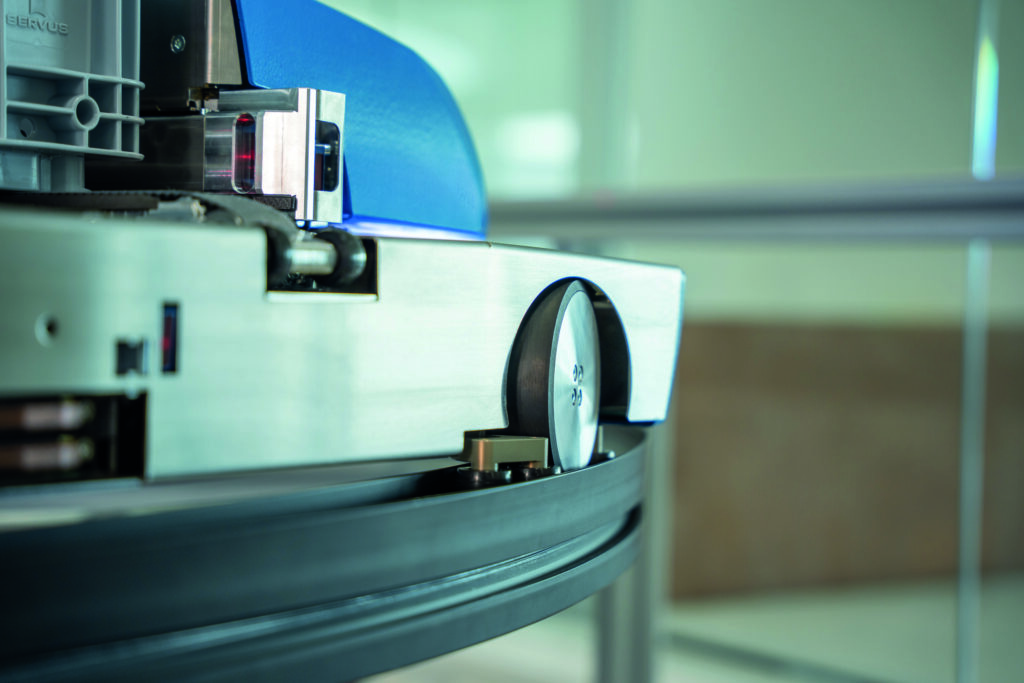
End-to-end management of all warehouse processes – manual, semi-automated and fully automated.
Scalable architecture with MIA Cockpit, Mobile, Touch, Monitor and Transport Manager.
Cross-system control of manual and automated material flows.
Decoupled data storage and defined integration principles ensure performance and reliability.
OPEN INTEGRATION INTO ERP AND AUTOMATION LANDSCAPES
Real-time and historical key figures for operational and strategic decisions.
The MIA Warehouse Management System consists of four clearly defined components that together form a consistent, stable system. Each component fulfils its own role – from central control and operational execution to transparency and analysis. Together, they enable intralogistics processes to be not only mapped, but also managed in a targeted manner.
The MIA Cockpit is the central control centre for all warehouse processes in real time. It provides complete transparency regarding stocks, orders and system statuses.
The standardised MIA interface (MIA WMS/MFC Connector) enables connection to any ERP system – quickly, securely and with future-proof functionality.

Control station for efficient, precise and centralised control of all warehouse processes.
Intuitive, browser-based interface with clear navigation.
Real-time dashboards, reports and KPIs for informed decisions.
Clearly defined access rights based on users and roles.
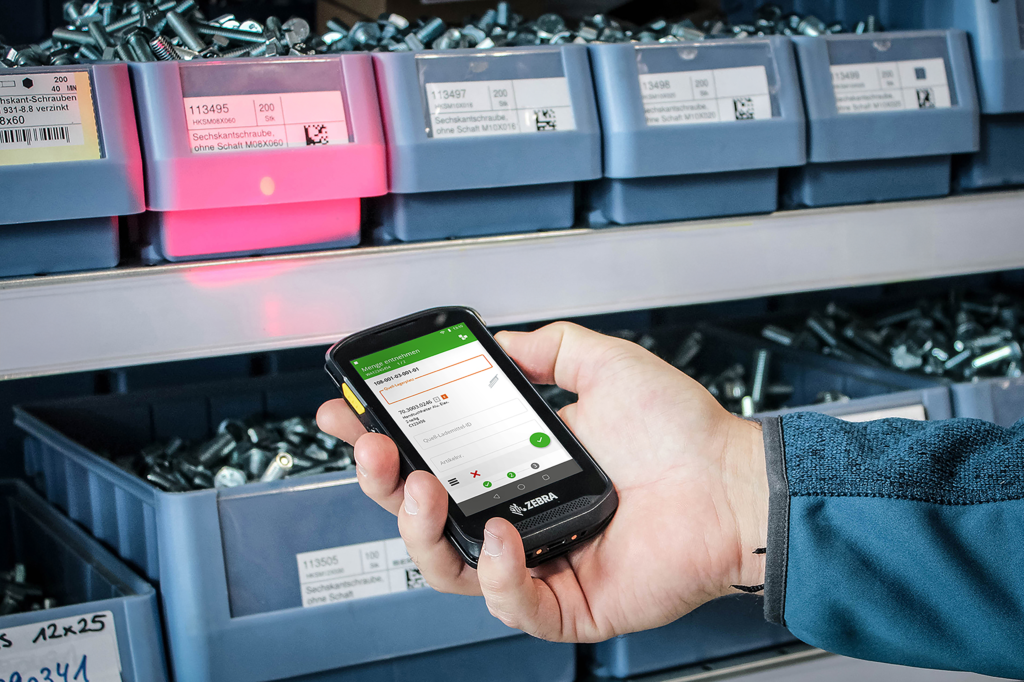
MIA Mobile is the solution for all logistics processes in manual warehouses. It consistently implements the principle of ‘goods to person’ and guides employees through clearly defined processes – intuitively, efficiently and with few errors.
Motion In Action means: standardised processes, optimised routing and transparent feedback ensure a stable flow even in dynamic, manual warehouse areas.
Central application for all manual logistics processes based on the ‘person-to-goods’ principle.
Use of mobile devices for fast, secure data collection directly at the storage location.
Clear user guidance with display of all open activities – for orientation and efficient working.
Standardised procedures and clear process management reduce errors and ensure a stable flow in daily operations.
Flexible mapping of simple and complex picking strategies.
Flexible integration into existing IT and device infrastructures.
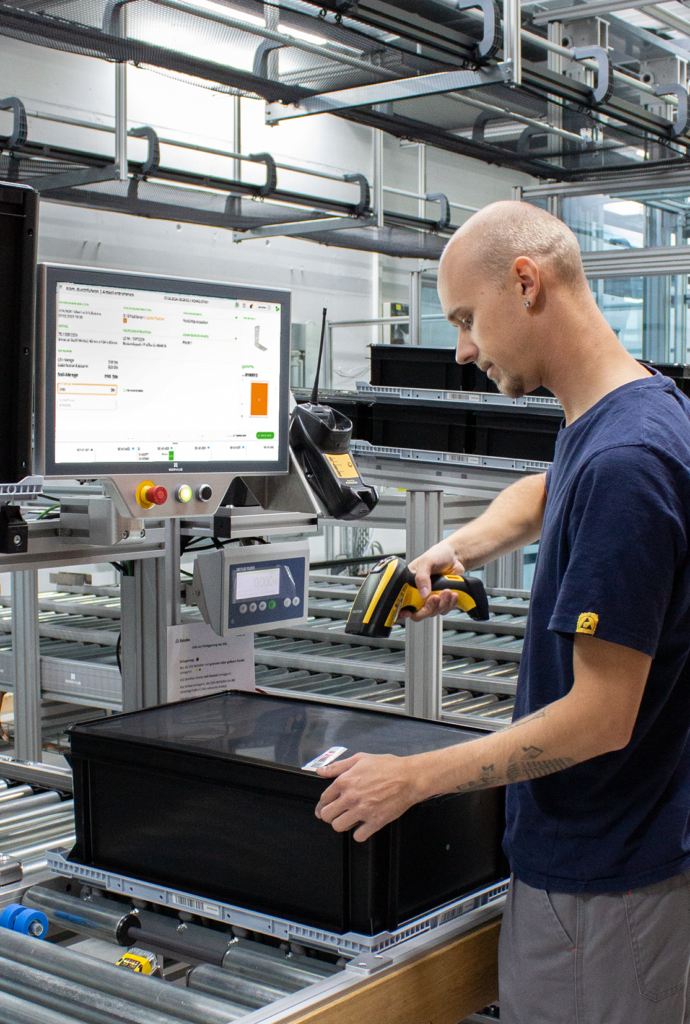
MIA Touch is the application for logistics processes at stationary workstations – for example, in small parts warehouses based on the ‘goods to person’ principle.
Clear process information, high performance and intuitive operation enable quick start-up and reliable processing – even at high throughput rates.
Motion In Action is evident here through stable processes, transparent system states and a high-performance, modern architecture.
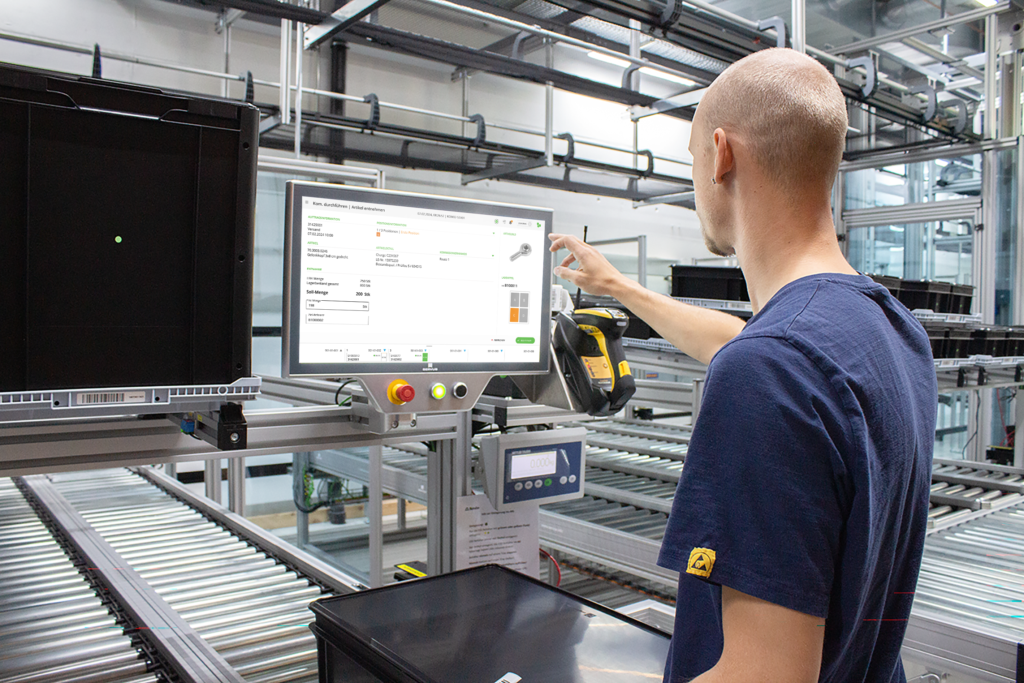
Touch-based application for logistics processes based on the ‘goods to person’ principle – can be used in a stationary manner or, if required, also in a mobile manner.
Supports stationary workstations in semi- and fully automated environments.
Secure verification and control of logistics processes using barcode and RFID technology – for fast processes and low error rates.
Manual, fixed or hands-free scanning – tailored to the respective work situation and process requirements.
Clear presentation of all relevant information for fast, secure processing – even at high throughput rates.
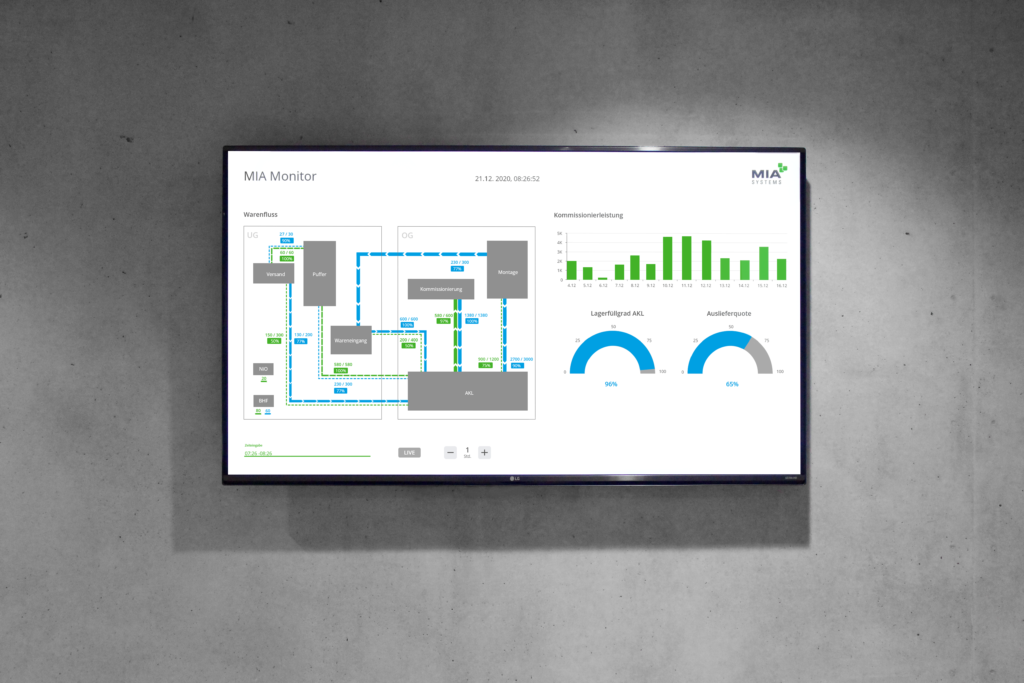
The MIA Monitor makes the natural flow of logistics visible. It visualises material flows, key figures and system statuses in real time and in a historical context – clearly, comprehensibly and interactively.
In an increasingly complex logistics world, the MIA Monitor creates transparency and orientation. Relevant data from ongoing operations is clearly presented so that deviations, bottlenecks and potential can be identified at an early stage. The monitor thus supports not only analysis but also active management of logistics processes.
The MIA Monitor is available in four specialised versions. All follow the same operating and display concept, but focus on different logistical issues.
Central overview of the entire logistics system.
Kombiniert Warenflussanalysen, Zeitsteuerung, Live-Modus und zentrale Kennzahlen in einem interaktiven Dashboard für Leitstände und Management.
Material flows are displayed as interactive Sankey diagrams, among other things. Target/actual comparisons and time control enable the analysis of live and historical data as a sound basis for decision-making. Key figures such as picking performance, warehouse fill rate or delivery rate are clearly presented in graphical form and form the basis for sound decisions.
Focused on maximum transparency in transport operations.
Transports are displayed graphically for each station, including transport type, status, priority and related transport chains. Critical transports (e.g. NIO) are immediately recognisable and can be controlled in a targeted manner.
Optimised for clarity in the consolidation and shipping area.
It visualises the delivery status of storage units per order or shipment as well as per location or lane. Colour and status logic show at a glance whether shipments are complete, partial or not yet delivered.
Customised monitor solutions for individual requirements.
Specific key figures, processes or data points can be displayed on one or more screens – tailored precisely to the requirements of the respective company.
Visualisation of material flows, key figures and system statuses in real time and historically.
Freely selectable time periods, live mode and intuitive analysis functions.
Comprehensible presentation of complex transport and goods movements, including target/actual comparisons.
Order picking performance, warehouse fill rate, delivery rate and other KPIs clearly presented.
Standard, transport, consolidation and customised monitors for different requirements.
Use existing data sources without interfering with operational activities.
MIA WMS relies on a clear architecture with separate responsibilities for operation, analysis, integration and transport control. This keeps processes stable, systems neatly connected and material flows controllable – even as complexity increases.
For a natural flow, the operating system must remain stable. Therefore, analysis, history and log data are stored in a separate DocumentDB (MongoDB).
This decoupling is a central component of the MIA architecture and ensures that transparency and performance are guaranteed at the same time.
DocumentDB is a requirement for:
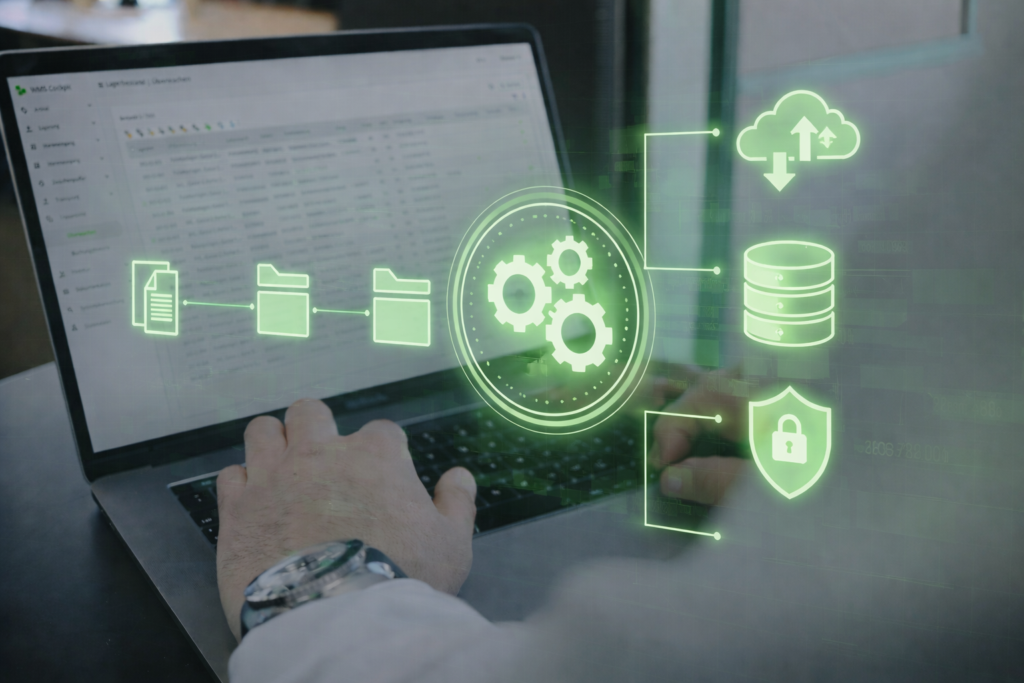
Separation of operational WMS operation and analysis, log and historical data to ensure maximum system stability.
Transparency and evaluations without compromising performance in operational warehouse management.
Database for dashboards, key figures and evaluations in MIA Cockpit and MIA Monitor.
Storage of booking histories, system events, interface logs and reprints.
Scalable document structure as a basis for reporting, monitoring and further development.
The MIA WMS/MFC Connector provides a standardised interface between the ERP system and MIA WMS or MFC.
The ERP system generates the notification and handles the mapping and transformation of the data completely before transfer.
The transfer is carried out as JSON via a REST API to the MIA WMS.
Feedback:
Central integration component for connecting ERP systems to MIA WMS and MIA Transport Manager (MFC).
Clear, modern interface logic for secure and high-performance data transmission.
Mapping and data preparation take place in the ERP system – the WMS remains clear, stable and focused.
Technical acceptance via HTTP response, technical feedback via separate feedback APIs.
Open for extensions, automation systems and other connected solutions.
The MIA Transport Manager is the central authority for cross-system control of all transports in the warehouse.
It orchestrates automated and manual material flows and ensures that movement is controlled, prioritised and carried out efficiently. This means that flow is actively managed – not left to the system.
Automated transport systems can be seamlessly connected via standardised interfaces. The MIA Transport Manager coordinates transport orders across system boundaries and ensures that facilities are utilised to their full capacity and bottlenecks are avoided.
Key features:
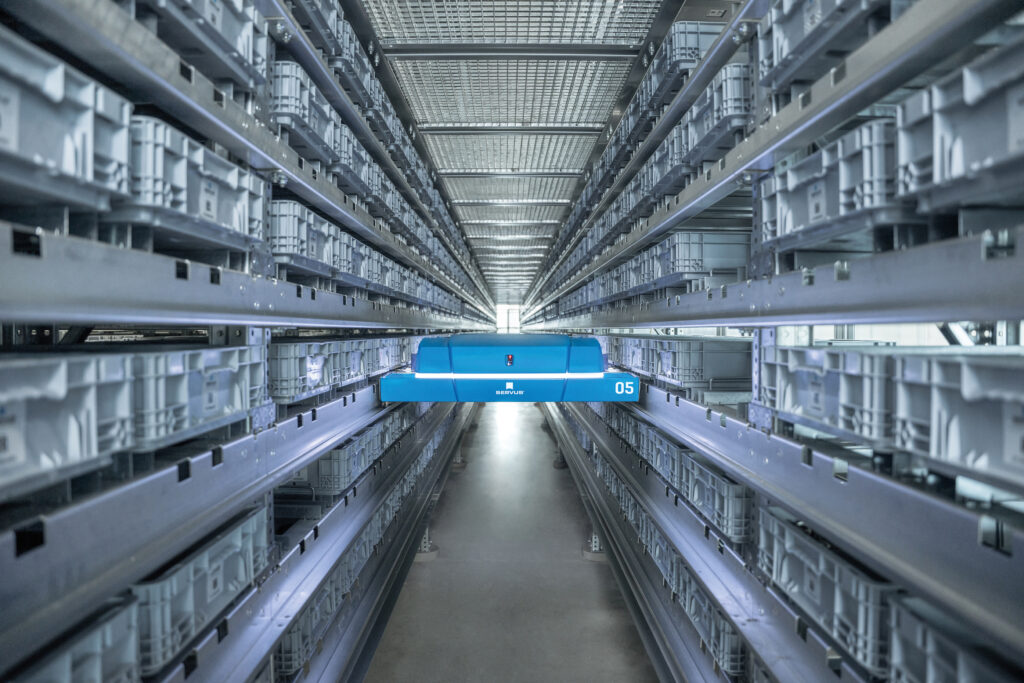
Cross-system orchestration of all manual and automated transports.
Prioritisation, coordination and optimisation of transport orders – for controlled movement instead of system chaos.
Coordination of forklifts, fully automated transport systems, shuttle systems and driverless transport systems (AGVs).
Avoidance of congestion and bottlenecks through intelligent control logic.
REST API for connecting external systems and automation solutions.
Transport control and status centrally visible and controllable in the control room.